

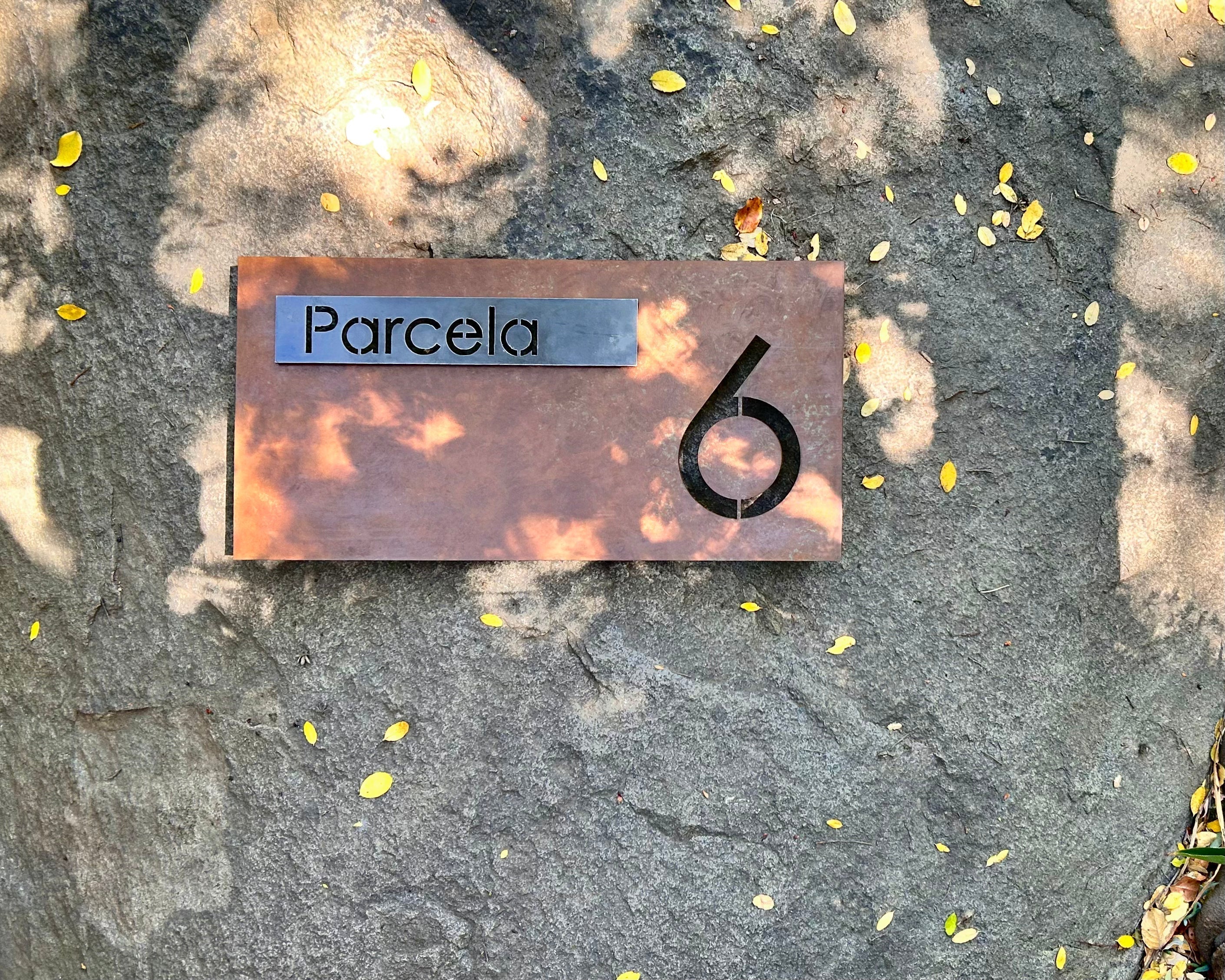
What's the best material for house numbers in Chile?
The answer is not in the supermarket or hardware store aisle.
Every time someone looks for a house number, they end up in the same place: the hardware aisle of a supermarket, staring at a row of painted aluminum or molded plastic pieces, all with the same generic finish that promises to last but after two winters is already peeling, crooked, and damaged.
It's not the buyer's fault. It's because no one has explained that there's another option.
The material no one mentions — and that changes everything
Structural carbon steel is not a decorative material. It's the same steel that supports bridges, frames buildings, and forms the backbone of industry. Hot-rolled sheets, 3 mm thick, with a density and presence that you can feel at first touch.
When that material is cut with CNC precision and installed on the facade of a house, something interesting happens: it needs nothing else. It doesn't need paint, it doesn't need sealant, it doesn't need annual maintenance. It only needs time. Time, with carbon steel, works in your favor.
The great deception of anti-corrosion paint
Before discussing why carbon steel ages well, we need to understand why conventional alternatives age poorly.
Anti-corrosion paint is not ordinary paint. It works through two simultaneous mechanisms: barrier protection — it physically blocks water and oxygen from reaching the metal — and chemical protection — its inhibiting pigments react with moisture to neutralize oxidation before it begins.
On paper, it's sophisticated. In practice, it has an Achilles' heel.
The structural component of any anti-corrosion paint is the resins — synthetic polymers that the industry doesn't call plastic, but which, when dry, form exactly that: a plastic film, continuous and flexible, adhered to the metal. It's the glue that holds everything together.
And like all polymers exposed to the sun, rain, and thermal cycles of the Chilean climate, this film has an expiration date. It cracks, loses adhesion, and peels. We've all seen this horrible result somewhere.
When that happens, the metal is exposed — but in worse conditions than if it had never been painted, because it never developed its own natural defense. The paint didn't fail due to poor quality. It failed because that is its inevitable destiny.
Oxidation is not the enemy. It is the process.
Here's what most people don't know about carbon steel: when it oxidizes naturally and in a controlled manner, it forms a stable rust layer that acts as its own protective barrier. It's not destructive corrosion — it's the material finding its balance with the environment.
The result is a reddish-brown patina that, if you look closely, you will see many more natural earth colors, and which evolves over time. It changes with the seasons and the light. It darkens with rain and lightens with the sun. In architecture, it's known as the corten effect — but here without artificial treatments, without simulations. Just the material being what it is.
That's not deterioration. It's character.
Why it works especially well in Chile
Chile is a country of extreme and contrasting climates. The saline humidity of the coast, the relentless sun of the north, the rains of the south, the thermal amplitude of the mountain range. No plastic coating survives this variety without maintenance.
Carbon steel, however, adapts. Its natural oxidation responds to the local microclimate and generates a patina that is, literally, a response of the material to its specific environment. A number installed in Valparaíso will look different from one in Santiago or Puerto Montt — and that difference is authentic, not manufactured.
The type of facade that makes it shine
Carbon steel doesn't compete with all styles — and that's also a virtue. It works precisely with:
- Exposed concrete or grey stucco — the contrast between warm rust and cool grey is architecturally impeccable
- Brick or natural stone walls — earthy tones complement each other organically
- Dark wood cladding — the combination evokes effortless industrial warmth
- Contemporary or minimalist architecture projects — where every material has to justify its presence
If your facade has personality, carbon steel will accompany it and complement your style. If your facade is plain, it will make it interesting and you will get a quality product that will add beauty to your entrance.
What IronPig does differently
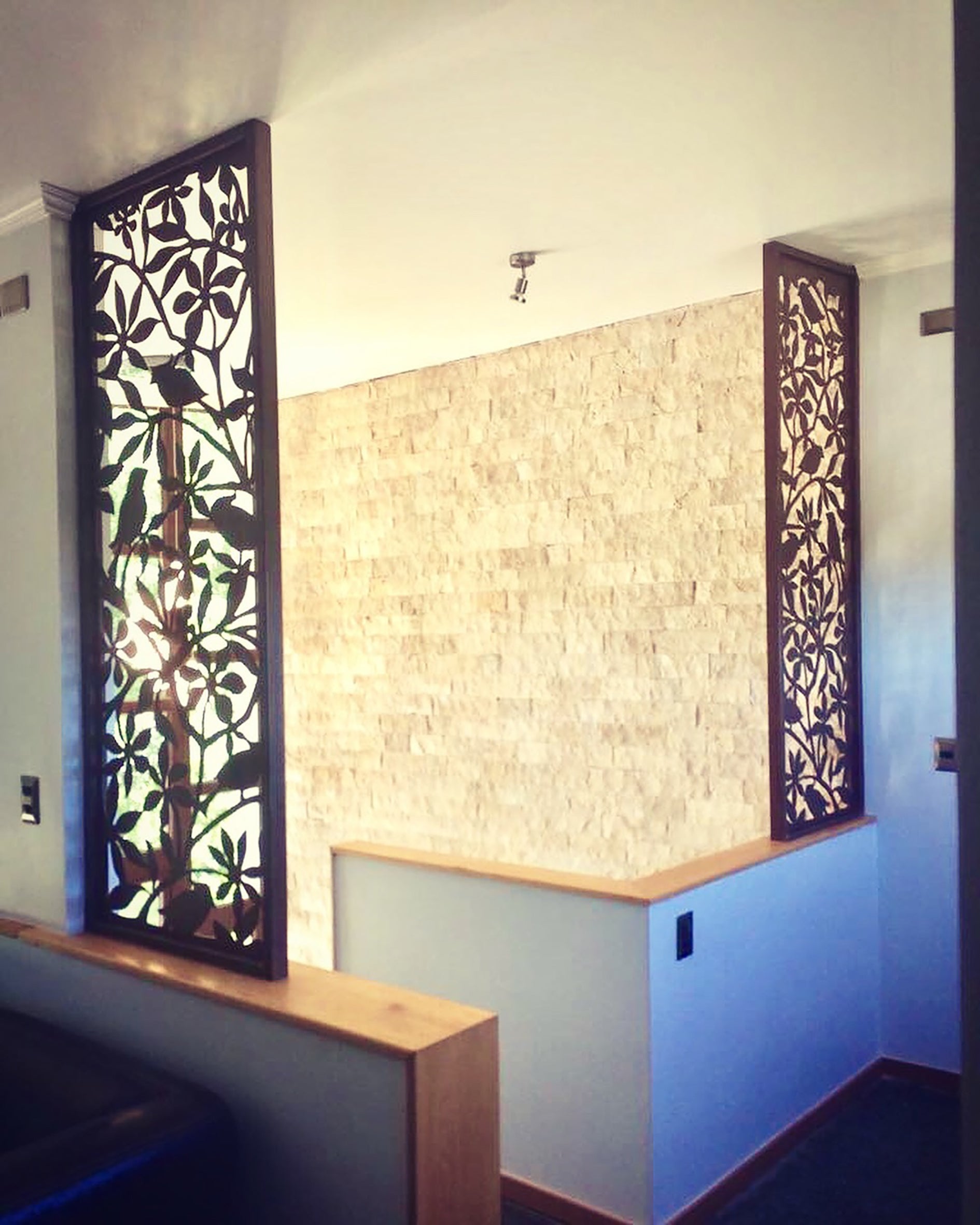
At IronPig, we don't just make any house number. We manufacture structural steel pieces cut with CNC precision. We design and customize, giving a unique form that combines the functionality of being a visible, modern house number adapted to the space you have on your facade. This is because we believe that distinction matters, that's what makes every home unique and a reflection of the personality of those who live there.
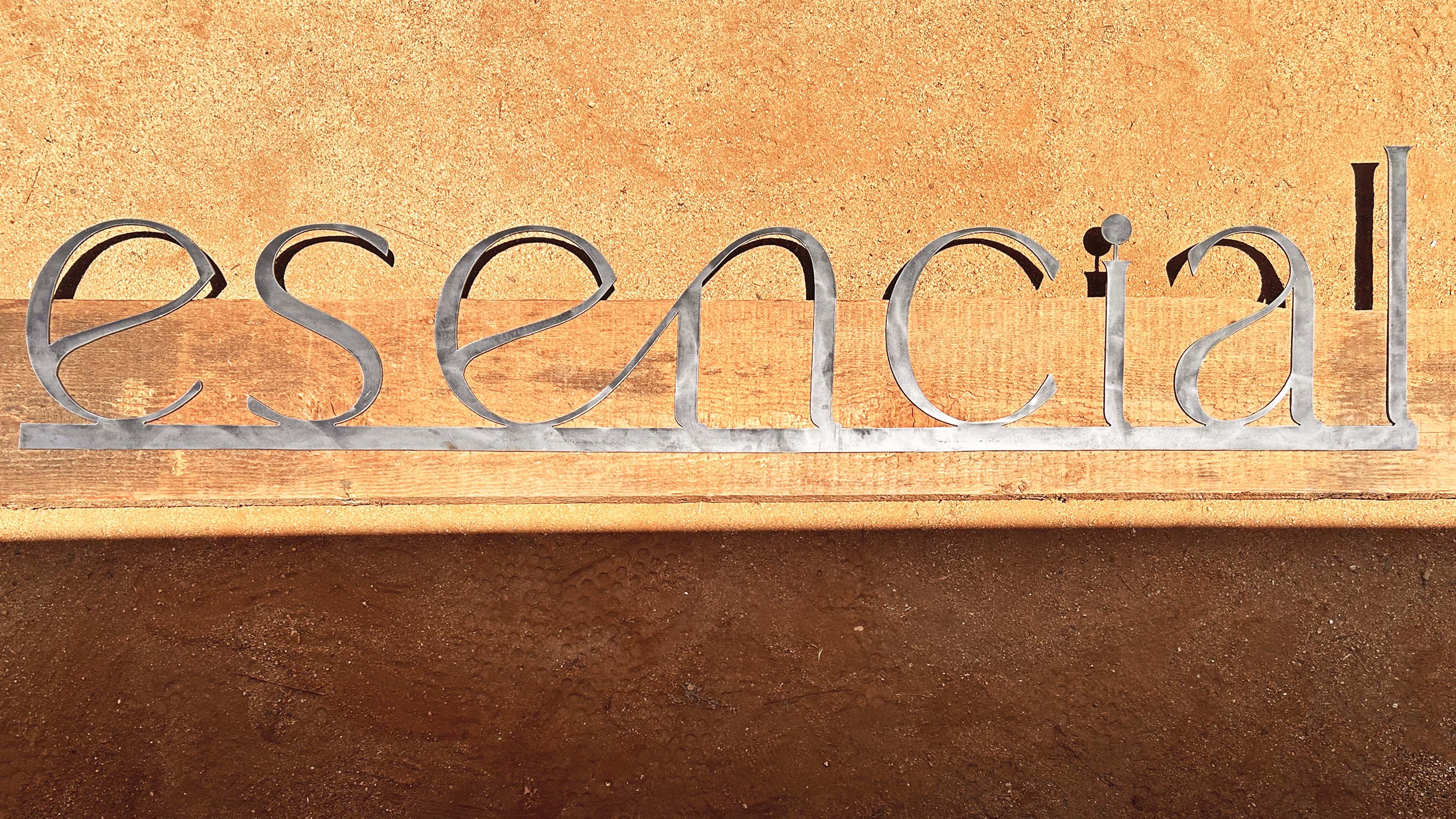
Each number leaves the workshop in pure carbon steel, without coatings, ready to be installed and begin its natural oxidation process from day one. There's no paint to maintain, no layer to protect, no finish to renew. Just the material doing what it knows how to do.
National manufacturing. Shipping throughout Chile. And a product that in ten years will look better than the day it arrived. Ironpig is quality Chilean craftsmanship. 🏠🇨🇱
If you're looking for the best material for house numbers in Chile — one that lasts, improves with time, and asks nothing in return — you've found it.

Leave a comment
This site is protected by hCaptcha and the hCaptcha Privacy Policy and Terms of Service apply.